The 10 Best Surf Destinations in Africa
The 10 Best Surf Destinations in Africa 🌊 From the world-famous waves of Taghazout on Morocco's Atlantic coast to the wild beaches of South Africa...



Surfing tricks (maneuvers) include cutback, floater, re-entry, snap, carving turns, 360s and aerials. Start with bottom turn + cutback, then progress to re-entries and aerials. |
Surfing isn’t just about catching waves, it’s about expressing yourself on the water and pushing your boundaries with style. From simple maneuvers that build your foundation to jaw-dropping tricks that turn heads, there’s always a way to level up your skills.
If you’re planning to practice your new skills in Morocco, check out our surfing in morocco guide for essential tips and packing advice.
In this guide, we’ll answer the following questions:
| Trick Name | Level | Where on the Wave | Key Tip | Common Mistake |
|---|---|---|---|---|
| Bottom Turn | Beginner | Base of the wave | Use back foot to carve smoothly for speed | Leaning too forward / slow rotation |
| Cutback | Beginner | Mid-section / white water | Return to power zone with a smooth arc | Too sharp turn, losing speed |
| Floater | Beginner | Lip of the wave | Stay light and centered to glide over the lip | Leaning too much, falling off |
| Re-entry | Intermediate | Top of the wave / lip | Aim high, pivot quickly and land clean | Low speed, catching the lip wrong |
| Snap | Intermediate | Lip / white water | Moderate Quick directional change with back foot drive | Over-rotating, losing balance |
| Layback | Intermediate | High on the face | Lean back, use legs and core for support | Not timing lean with wave power |
| Stall | Intermediate | Barrel / tube | Shift weight to slow down and hold position | Leaning too forward, losing control |
| Carving 360 | Advanced | Lip | Fast rotation, full commitment | Slow rotation, not completing spin |
| Tail Slide | Advanced | Lip / wave face | Shift weight to front foot, slide tail lightly | Overdoing slide, losing speed |
| Aerial / Air | Advanced | Lip / airborne | Launch with speed, spot landing | Poor timing, unstable landing |
| Barrel Riding | Advanced | Tube / hollow wave | Keep low, centered, eyes on exit | Too upright, hitting wave wall |
Want to level up your skills? Check out our surf lessons and coaching in Taghazout with local pros for personalized guidance.
Surfing isn’t just about standing on your board—it’s about feeling the wave and having fun while improving your skills. If you want to learn to surf, building a strong foundation and practicing the right techniques will help you progress faster and gain confidence in the water.
Here are some must-know tricks that every surfer should aim to master, whether you’re starting to learn to surf or looking to take your skills to the next level.
Stall: Slow down in a tube or deep section to hold your line. Shift your weight carefully to stay balanced.
Barrel Riding: Ride inside the tube with focus and confidence. Timing and positioning are crucial.
Step 1 – Gain Speed: Paddle hard and drop into the wave, making sure you have enough speed to carry through the turn.
Step 2 – Look Back: Turn your head and look toward the breaking part of the wave (the white water). Your body will naturally follow.
Step 3 – Shift Weight: Lean slightly on your back foot while keeping your front foot steady. This helps carve the board back toward the wave’s power zone.
Step 4 – Complete the Turn: Guide your board smoothly back toward the breaking wave, keeping your knees bent and your center of gravity low. Ride out with control.
Common Mistakes
Pro Tips
Check out our surf camp packages to book a surf week and improve your skills with local pros.
The Aerial (also known as an air) is widely considered one of the most difficult tricks to master in surfing. An aerial involves launching your board off the lip of the wave and performing a jump while in mid-air.
After reaching the peak of your jump, the challenge is to land back on the board, maintaining balance and control.
Mastering this trick requires excellent timing, air awareness, and the ability to read the wave’s dynamics. This trick demands a lot of practice, even for experienced surfers.
The key to staying on your board and avoiding slips lies in surf wax. Wax provides grip, ensuring that your feet don’t slide off the board when wet. Applying wax in a crisscross pattern across the deck maximizes traction.
Beyond waxing, maintaining the correct stance is also crucial. Surfers should keep their knees slightly bent, their weight centered, and engage their core for better stability. If you’re looking to improve your technique faster, taking surf lessons in Taghazout with experienced instructors can help you master your balance and build confidence in the water.
Over time, surfers develop muscle memory and reflexes to maintain balance in various conditions.
Do you want to learn and perform new surf tricks? What can you do with your surfboard after you’re able to stand up and keep balance?
Learning and performing surf tricks is important for all surfers. Naturally, you too want to learn more and improve your surf skills. If you already know the basics, then this article is perfect for you, as it describes some surf tricks that you can try next time you paddle out.
If you’re still mastering the basics, our How to Catch a Wave guide walks you through every step.
Surfing Tricks for Beginners can be performed both, on and off (with air-time) the wave as well front side and backside. Barrel riding and longboard manoeuvres.
These are some of the coolest Longboarding Tricks you might want to learn to get to the next level !
Bottom turn – is an important step because it sets the base for your ride. It is the first move you need to perform after dropping in to a wave, as it enables you to transform your pop-up motion into horizontal speed down the surfing line.
To perform the Bottom Turn, you must use your back-foot to turn your board in the direction you wish to surf. At this point, you will be ready to consider your next move.
Re-entry – Sometimes described as ‘off the lip’ or ‘hit the lip’, Re-entry is the next manoeuvre to perform after you pick up speed and make a bottom turn on your surf board.
This trick is all about the speed. You have to reach the highest point of the wave as quick as you can and then ride down from it as if you’ve just caught it. Making this trick your board is at vertical position so it is very effective to watch.
Cutback – To do this one, you have to move farther from the breaking line and make a powerful but at the same time smooth turn to the direction of white water. Cutback allows you to generate more speed for your next trick. It is often used before the tube riding to take up the best position for it.
Roundhouse cutback is a very effective trick and exciting to watch. A surfer rides to the breaking section of the wave and once reaching white water he makes a cutting turn at the opposite direction. It looks like a surfer is riding the figure of eight on the surface of the wave.
Reverse – Reverse is usually made after re-entry or cutback when a tail of your board is still in the air. Surfer turns around at 180 degree riding from the wave with the fings in front.
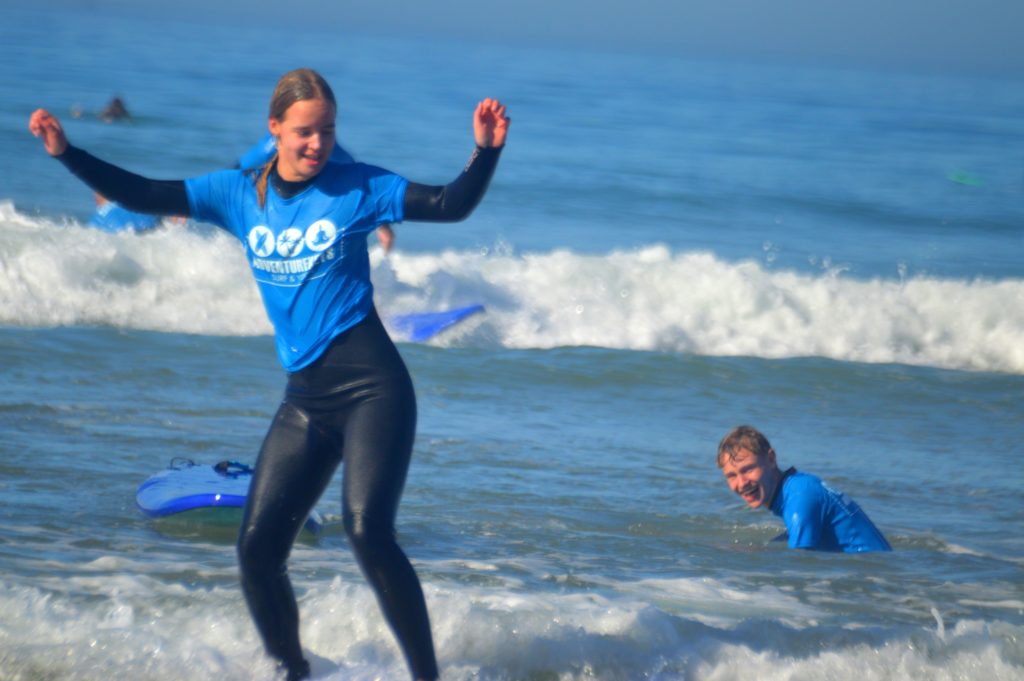
Layback – Here the surfer lean on the wave with his back. Frontside layback differs a lot from backside layback. Frontside is made on a high speed cutback and the difficulty is that you need to use all the power of your legs and the water to raise back up from it.
Backside layback is usually used while barrel riding. You lean on the wave wall trying to keep balance. Nowadays layback is popular after air tricks as a way to correct the mistakes of water landing – surfer has an opportunity to fall down and return back to a position immediately with a water power.
Snap – This trick is similar to cutback, so don’t mix them. Snap is a quick directional change. It is a very rapid maneuver that helps you to stay at the correct spot of the wave not lost your speed at that.
If you push your board forward doing snap and lean on the water straightened your back leg – it will be called Layback snap. That way you combine two tricks at one.
Stall – Stall is for slowing down your speed. You need to move the weight of your body to your back leg drowning the tail of your board a little bit. It can be used for riding deeper into the tube or just not to miss some place you need on your wave.
Floater – When a surfer gets on to the lip, rides it and re-enters back into the wave – it is called floater. What is amazing about floater is that it is ridden with such lightness in movements, looks like a rider is sliding the lip of the wave being gravity free at all.
Floaters are also good choice for finishing the maneuver at the wave when it starts to close down. Here you can just make a floater and ride away with a white water.
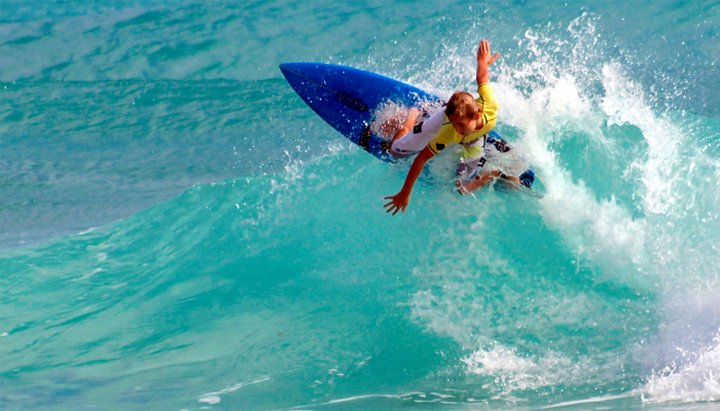
Carving 360 – After bottom turn a rider makes a very fast 360 degree turn right on the lip in the direction where the wave is closing down. It is a very effective trick cause a surfer is spinning around so fast while doing it so it’s hard to recognize what is happening there.
Tail slide – During the fast turning a rider moves the weight of the body on to the front leg relieving the tail of the board at this and making it sliding the water. That way a surfer rides on the tail of his board. If you do the same but on the lip of the wave – it will be called Tail waft.
Among the air tricks, the most popular are air reverses, alley oops, superman, different flips. A lot of air maneuvers came to surfing from skateboarding and have some similar features.
A rider flies out of the wave, makes a trick there in the air with his board and lands on the same wave. Air tricks are very challenging, it needs high speed, careful choosing of the right section of the wave to jump and a lot of practice.
Barrel riding is a particular direction in surfing. At the contests it is also a separated discipline. All the surfers dream to find a tube wave and catch it. They are ready to cross the world in searching of it.
And not everyone can ride it, cause it needs good knowledge and experience, confidence in your movements and posture on the board and complete absence of fear.
Want expert support as you progress? Our surf guiding taghazout service connects you with local pros for personalized coaching.
Cause you have to ride that part of the wave which is the most challenging and risky for a surfer.
Longboard surfing also goes as a separate category. It looks like a dance on the board. And there are a lot you can perform there and have fun. For longboard tricks you have to know well how to move the weight of your body to travel on your board.
You can make cross steps on the board, try to ride the nose of your board or perform different fun tricks like fins first take off or head standing.
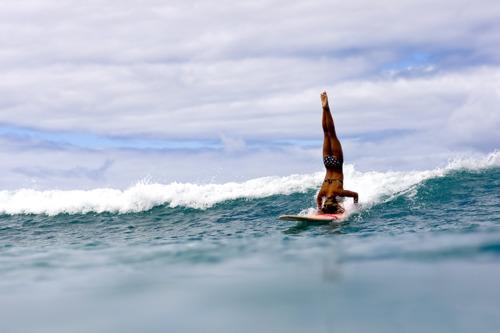
Longboard tricks look very effective and always interesting to watch.
If you’re looking for perfect waves to try these maneuvers, discover the top spots in our Mavericks Wave guide to Taghazout surf spots, or plan a sunrise session at Imsouane Surf Spot for a legendary ride.
As you can see there are a lot of opportunities in surfing and things to do and to practice. You will definitely discover something for yourself, something close and individual for you.
But the only way to find your style and learn all the maneuvers is to go surfing! So don’t postpone it, surf more, don’t give up when something goes wrong and we hope to meet you in the ocean performing all that tricks some day, good luck with it!
Ready to take the plunge? Book your surf trip with our surfcamp taghazout and start your journey !
Beginner-friendly moves like Bottom Turn, Cutback, Floater, and simple Snap are the most common. They build your foundation for advanced tricks.
The Aerial is considered one of the hardest. Launching off the lip, spin or flip in mid-air, and land back on the wave requires speed, timing, and lots of practice.
Surfing moves are often called tricks or maneuvers. Examples include Bottom Turn, Cutback, Floater, Re-entry, Snap, Layback, and Barrel Riding.
Floater is when you ride over the lip of the wave and re-enter smoothly. It looks effortless and adds style to your ride.
Cutback is a turn back toward the breaking part of the wave. It keeps you in the wave’s power zone and helps generate speed for your next trick.
Learning aerials depends on your experience. For skilled surfers, it may take months of practice, while beginners need more time to master basic speed, balance, and timing first.
Ready to experience these incredible surf spots yourself? Join us at Adventure Keys for the ultimate surf, yoga & cowork experience
All levels welcome
Meet like-minded adventurers
Walking distance to all breaks
Handpicked reads to inspire your next adventure in Taghazout.


| Cookie | Duration | Description |
|---|---|---|
| cookielawinfo-checkbox-analytics | 11 months | This cookie is set by GDPR Cookie Consent plugin. The cookie is used to store the user consent for the cookies in the category "Analytics". |
| cookielawinfo-checkbox-functional | 11 months | The cookie is set by GDPR cookie consent to record the user consent for the cookies in the category "Functional". |
| cookielawinfo-checkbox-necessary | 11 months | This cookie is set by GDPR Cookie Consent plugin. The cookies is used to store the user consent for the cookies in the category "Necessary". |
| cookielawinfo-checkbox-others | 11 months | This cookie is set by GDPR Cookie Consent plugin. The cookie is used to store the user consent for the cookies in the category "Other. |
| cookielawinfo-checkbox-performance | 11 months | This cookie is set by GDPR Cookie Consent plugin. The cookie is used to store the user consent for the cookies in the category "Performance". |
| viewed_cookie_policy | 11 months | The cookie is set by the GDPR Cookie Consent plugin and is used to store whether or not user has consented to the use of cookies. It does not store any personal data. |